For decades, the beauty industry existed in two extremes: you either applied a topical cream that did little more than hydrate, or you had surgery for a facelift. If you were anywhere in the middle, perhaps noticing a softer jawline or crepey skin on the neck, you had limited options.
Today, that middle ground has become one of the most exciting areas in aesthetic medicine. We now have advanced technology that can help firm the skin from the inside out without incisions. This guide explains the science, the financial investment, and the honest clinical expectations behind some of the best non surgical skin tightening treatments available today.
The Evolution of Skin Tightening: Bridging the Gap Between Creams and Surgery
The shift from surgery to energy based devices represents a major change in how we view ageing in dermatology. Treatment has moved away from simply stretching the skin and towards remodelling it. While surgery removes excess skin, modern treatments focus on biological rejuvenation by encouraging the body to act as though it is younger than it is.
What Causes Skin Laxity in the First Place?
Think of your skin like a mattress. When you are young, the springs, or collagen fibres, are tight, while the filling, made up of elastin and hyaluronic acid, is plump and supportive. Over time, two things happen. First, external factors such as UV radiation and pollution damage those collagen fibres. Second, your body’s natural collagen production begins to decline by about 1% each year from your mid twenties.
By the time you notice sagging, the structural foundation of the skin has already started to thin. Clinicians refer to this as laxity, which means a loss of elasticity and firmness.
The Gold Standard: Energy Based Treatments
If creams are the surface polish and surgery is the structural overhaul, energy based treatments are the foundation repair. They work through controlled heating or targeted injury, which triggers a wound healing response deep within the dermis.
Radiofrequency Therapy: The Gentle Deep Heater
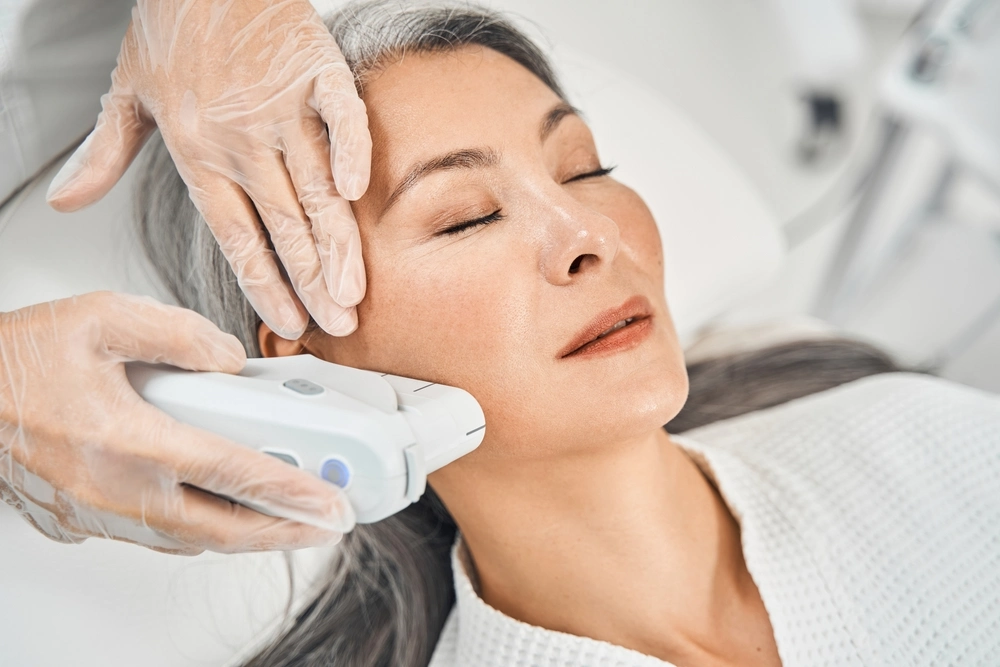
Radiofrequency is one of the most versatile tools used for skin tightening. Devices such as Thermage or NuEra Tight use radiofrequency energy to heat the deeper layers of the skin to a precise temperature, usually between 40°C and 43°C.
This heat causes existing collagen fibres to contract, which can create the immediate glow that many patients notice after treatment. It also stimulates a process of new collagen and elastin production over the following months. Radiofrequency can be a suitable option for the jawline and the eye area because it is non-invasive, has minimal side effects, and usually involves no downtime.
High Intensity Focused Ultrasound: Targeting the Foundation
While radiofrequency heats broader layers of the skin, High Intensity Focused Ultrasound, often known through the brand name Ultherapy, acts in a more targeted way. It bypasses the skin surface to deliver focused energy to the SMAS layer, which is the same deep tissue layer that surgeons target during a facelift.
This makes HIFU one of the stronger lifting options among non surgical treatments. It is generally more uncomfortable than radiofrequency, but it can provide a level of structural lifting that many other devices cannot achieve.
Laser Skin Resurfacing: Improving Texture and Tone at the Same Time
Lasers such as CO2 or Fraxel work from the outside in. They can offer powerful laser skin tightening benefits while also improving several layers of the dermis. By creating tiny channels of heat in the skin, they encourage the body to replace damaged, loose skin with fresher and more organised tissue.
Although lasers are best known for treating pigmentation, scarring, and uneven skin texture, the tightening effect that occurs during healing can be significant. This is especially useful for fine lines and crinkly skin under the eyes or around the mouth.
What the Research Says About Results
It is important to separate marketing claims from clinical data. Many high end medical devices are supported by clinical studies showing measurable improvement in skin firmness. In the world of non surgical aesthetics, even a modest improvement can be the difference between looking tired and looking refreshed.
The Collagen Clock: How Long Does It Take to See a Difference?
Patience is part of the process with non surgical skin tightening. You may see a temporary firming effect immediately after treatment due to mild inflammation, but true collagen remodelling takes time.
New collagen formation usually develops over several months. Results often become more noticeable between three and six months after treatment. You are essentially planting seeds in a garden, so you should not expect the full result the next morning.
The Reality of Non Surgical Limitations and Expectations
The most satisfied patients are those who understand that non surgical treatments cannot replicate a surgical lift. If there is significant hanging skin or a heavy turkey neck, a device may offer a modest improvement when the patient is hoping for a dramatic transformation.
These treatments work best for mild to moderate laxity or as pre rejuvenation to help delay the need for surgery.
Breaking Down the Costs: Investment by Treatment Type
The cost of skin tightening depends on the complexity of the technology, the treatment area, and the expertise of the provider. These machines can cost a clinic a significant amount, and treatment prices often reflect that investment.
Radiofrequency treatments such as Thermage or Venus Freeze may cost between $1,500 and $3,500 per session.
HIFU treatments such as Ultherapy may cost between $2,000 and $4,500 depending on whether you treat the full face or only the jawline.
Laser resurfacing may cost between $1,000 and $3,000 per session.
Maintenance: The Hidden Cost of Longevity
Unlike a facelift, which can last a decade, non surgical tightening works against the natural process of ongoing biological ageing. To maintain your results, you should budget for a top up treatment every 12 to 18 months.
Think of it like a dental clean. It is easier to maintain the health of the tissue than to repair it once it has declined again.
In Clinic Procedures Versus At Home Devices
The market is currently filled with handheld radiofrequency and LED devices that claim to deliver professional results at home. It is important to manage expectations here.
Clinical Power Versus Consumer Convenience
The main difference is power and safety. A clinical radiofrequency machine is a high voltage device operated by a trained professional who monitors skin temperature in real time. This helps reduce the risk of burns while making sure the tissue reaches the therapeutic temperature needed to stimulate change.
At home devices are intentionally less powerful so they are safer for general use. While an at home device may help maintain skin radiance, it usually does not have the energy output required to structurally lift sagging skin and tissue.
Choosing the Right Treatment for Your Skin Type and Age
There is no single best treatment for everyone in aesthetics. Your skin age, skin type, and specific concerns should guide the treatment choice.
Treatments for Your 30s and 40s: Prevention and Mild Laxity
In your 30s, the goal is often to maintain existing collagen levels. Microneedling with radiofrequency, using devices such as Potenza or Morpheus8, is often chosen at this stage.
This type of treatment can help with early pore enlargement and minor softening of the jawline by creating controlled micro injury that keeps collagen producing cells active.
Treatments for 50 Plus: Structural Support and Deep Remodelling
For patients in their 50s and beyond, the goal often shifts towards lifting and support. This may require a combination approach.
A provider may recommend a treatment plan that includes Ultherapy to lift the deeper foundation, followed by a series of radiofrequency treatments, injectables, or laser resurfacing to smooth the surface texture. At this stage, multimodal therapy, which uses different types of energy and treatment methods, often provides the most natural and visible improvement in overall skin quality.
Pre Treatment and Aftercare: Maximising Your Investment
Your skin is a living organ, not a piece of fabric. How you care for it before and after your appointment can influence how much collagen your body produces.
The Role of Retinoids and Vitamin C
Think of these as the fuel for your treatment. Retinoids, such as tretinoin, help speed up cell turnover and support a more regenerative skin environment. Vitamin C and peptides are also important because they help support collagen synthesis.
Without the right skin health support, your body may not build new fibres as effectively as the treatment is designed to encourage. Many experts recommend a consistent medical grade skincare routine for at least four weeks before a procedure.
Sun Protection as an Anti Laxity Essential
There is little value in spending thousands on a skin tightening treatment if UV exposure damages the new collagen shortly afterwards. UV exposure is one of the major contributors to visible skin ageing.
Skin can also be more vulnerable to pigmentation changes after treatment, so a high SPF broad spectrum sunscreen is one of the most important parts of your recovery routine.
Conclusion: Navigating Your Path to Firmer Skin
Skin tightening has moved from wishful thinking to predictable science. While there is still no fountain of youth in a machine, the ability to stimulate the body’s own repair systems is a powerful tool.
By choosing the right energy source for your age and concerns, maintaining realistic expectations, and supporting your investment with high quality skincare, you can help turn back the collagen clock. The journey to firmer skin is not an overnight transformation. It is a commitment to your skin’s long term resilience.
Ready to explore a personalised skin tightening treatment plan? Book a consultation with Lumi Skin Clinic today and let our experienced team assess your skin, discuss your goals, and recommend the most suitable non surgical options for a firmer, more refreshed appearance.