TL;DR: Blackheads on cheeks form when excess oil and dead skin cells block a pore and the exposed material darkens. A gentle routine, non-comedogenic products and suitable acne treatments may help reduce them, but squeezing or harsh scrubbing can irritate the skin and increase the risk of marks or scarring. Not every dark dot is a blackhead: normal sebaceous filaments can look similar. If the spots persist, become inflamed or are difficult to identify, seek advice from a pharmacist, GP or qualified skin professional.
Blackheads on cheeks can be particularly frustrating when they return despite regular cleansing. The first step is understanding whether the dark spots are genuinely blackheads, rather than trying to scrub them away. Once you know what you are dealing with, you can choose a routine that targets blocked pores without unnecessarily irritating your skin.
What are blackheads on cheeks?
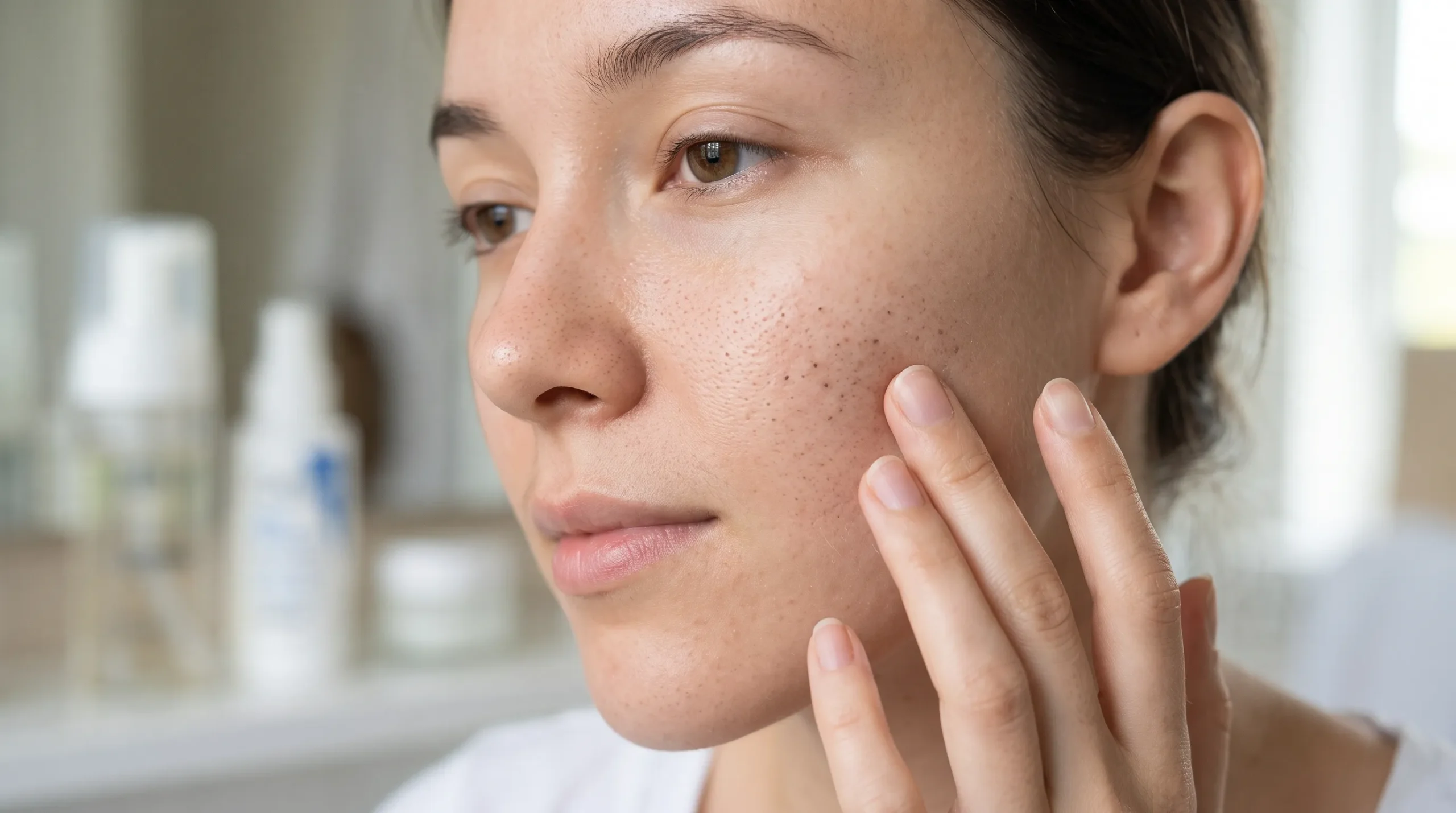
A blackhead, or open comedo, is a type of acne. It forms when oil (sebum) and dead skin cells collect inside a hair follicle, leaving an opening at the skin’s surface. The exposed material darkens through oxidation; it is not simply dirt that needs to be washed off.
Blackheads often look like small, dark dots with a visible opening. They may occur on the nose, forehead, chin or cheeks and are usually not painful unless another type of acne is present. The American Academy of Dermatology’s guide to acne symptoms explains how blackheads differ from other acne lesions.
If your main concern is the nose rather than the cheeks, see Lumi Skin Clinics’ separate guide to removing blackheads from the nose. Keeping these concerns separate helps you choose advice suited to the affected area.
What causes blackheads on cheeks?
Excess oil and dead skin cells
Blackheads develop when oil and dead skin cells build up within the pore. Skin type, genetics and hormonal changes can influence oil production. Acne is not a sign that your face is dirty, and washing it more often is unlikely to resolve the blockage.
Skin and hair products
Rich or pore-clogging cosmetics, sunscreen or hair products may contribute to congestion in some people. This does not mean you need to stop moisturising or wearing sunscreen. Choose products labelled non-comedogenic or oil-free where possible, and remove make-up gently at the end of the day.
Friction and repeated contact
Frequent rubbing, pressure and contact with items touching the cheeks can aggravate breakouts in some people. Pay attention to patterns involving make-up brushes, phone contact, headgear or pillowcases, but do not assume that any one of these is the cause.
Australian healthdirect acne guidance explains that acne develops from blocked follicles and that harsh washing and picking can make things worse.
Are the dark dots on your cheeks really blackheads?
Not every visible pore contains a blackhead. Sebaceous filaments are normal structures that help carry oil to the skin’s surface. They can look like small, flat grey or yellowish dots and should not be repeatedly squeezed. The Cleveland Clinic’s comparison of sebaceous filaments and blackheads explains the distinction.
| What you notice | What it might be | Sensible next step |
| A dark, slightly raised plug in an open pore | Blackhead | Consider gentle acne-focused skincare |
| Small, fairly uniform, flat dots | Sebaceous filaments | Avoid trying to extract every visible pore |
| Flesh-coloured or white small bumps | Closed comedones or another skin concern | Seek advice if they persist or spread |
| A dark spot that changes, bleeds or looks unlike nearby pores | Not necessarily acne | Arrange a GP or dermatologist assessment |
These are general clues, not a way to diagnose a skin condition from appearance alone.
How to get rid of blackheads on cheeks without irritating your skin
1. Start with gentle cleansing
Wash with a mild cleanser and lukewarm water, usually morning and evening. Use your fingertips rather than an abrasive brush or scrub. Removing make-up at night is helpful; repeatedly washing throughout the day can dry and irritate skin without clearing the blockage.
2. Keep the skin moisturised and protected
A lightweight, non-comedogenic moisturiser can help your skin tolerate a consistent routine. Continue using suitable broad-spectrum sunscreen and other sun-protection measures. Skipping moisturiser or over-exfoliating is not a reliable way to make pores smaller.
3. Ask about ingredients that target clogged pores
Salicylic acid is an ingredient used in some acne products to help clear blocked follicles. Topical retinoids may also help prevent blackheads, but their suitability depends on your skin and circumstances. Some are prescription medicines in Australia. Ask a pharmacist or GP which option is appropriate, especially if your skin is sensitive or you already use an acne treatment. Introduce products cautiously rather than layering several strong actives at once.
Do not start retinoid products if you are pregnant or planning pregnancy without medical advice. Australia’s Pregnancy, Birth and Baby guidance advises avoiding skincare containing retinol and checking uncertain ingredients with a clinician.
4. Leave stubborn plugs alone
Squeezing a blackhead with your nails or using harsh extraction tools can injure the surrounding skin. It may result in inflammation, dark marks or scarring. Pore strips can also irritate skin and do not address why congestion returns.
For evidence-based treatment principles, see DermNet’s guide to comedonal acne.
A simple routine for blackhead-prone cheeks
| Time | Basic routine | What to avoid |
| Morning | Gentle cleanser, lightweight moisturiser, sunscreen | Strong scrubs or repeated cleansing |
| Evening | Remove make-up, cleanse gently, moisturise | Sleeping in make-up or squeezing spots |
| When choosing treatment | Ask a pharmacist or GP about an appropriate acne ingredient | Starting multiple irritating products together |
Consistency matters more than adding extra steps. It may take several weeks to a few months to judge whether an acne treatment is helping. If the cheeks are becoming sore, flaky or increasingly red, stop irritating products and seek professional advice rather than increasing their strength.
When should you consider professional treatment?
If blackheads keep returning, do not improve after a reasonable trial of suitable skincare, or appear alongside painful or inflamed acne, a GP or dermatologist can assess the cause and advise on treatment. Persistent congestion may sometimes be addressed with clinician-recommended procedures, but extractions and facial treatments are not suitable for everyone and do not guarantee that blackheads will never return.
Lumi Skin Clinics has information on its Pores Removal and Acne Treatment services. Its article on what a Hydrafacial involves also explains a cosmetic cleansing and extraction approach. These are options to discuss with the clinic, not substitutes for a medical diagnosis or guaranteed cures for acne.
Seek medical review sooner if lesions are painful, rapidly changing, infected-looking or beginning to scar.
How to help prevent blackheads from returning
Blackheads can recur because your skin continues to produce oil and shed cells. Rather than aiming for pore-free skin, focus on habits you can maintain:
- Cleanse gently and remove make-up before bed.
- Choose non-comedogenic moisturisers, sunscreen and cosmetics where practical.
- Avoid repeated squeezing, picking and aggressive exfoliation.
- Notice whether particular hair products or items rubbing against your cheeks coincide with breakouts.
- Give an appropriate routine time to work, and review it with a health professional if there is no improvement.
Conclusion: Treat the congestion, not just the dark dots
Blackheads on cheeks are common, but the best response is not to scrub or squeeze every visible pore. Confirm what the spots are, use gentle products and seek advice on suitable acne treatments when needed. If the problem persists, a professional assessment can help you avoid treatments that are unsuitable for your skin.
To explore a consultation, review Lumi Skin Clinics’ treatment options or contact the clinic in Haymarket, Sydney. Ask which options are appropriate for your particular skin concern and what results can realistically be expected.
Disclaimer: The above content is for general informational purposes only and does not constitute medical advice. It is not intended to diagnose, treat, cure, or prevent any condition. Information may change over time. Please consult a qualified healthcare professional before making any health or treatment decisions.